
Stress Less Hack: Coach Yourself to a Win

When you coach yourself, the tone of your self-talk is as important as the words you use. A harsh, critical tone, even with encouraging words, can increase your stress and hurt your performance. To see how this works: Stand in front of a mirror, look at yourself, scowl, and yell “Relax!” How does that feel? Then, look in the mirror, smile, and in a soft, soothing voice, say, “Relax.” How did that feel? To be the coach you want to be to yourself, practice your coaching self-talk in front of a mirror. Start by speaking to yourself at a normal volume with a relaxed, soothing, and confident look on your face. After a minute or two, switch to whispering the coaching self-talk to yourself with that same relaxed, soothing, and confident look. Last, switch to just thinking about coaching self-talk as you look at yourself in the mirror with that relaxed and confident look. Practice this every day, particularly before a practice or game, a quiz or test, or any performance. Stress Less: A Teen’s Guide to a Calm Chill Life
Stress Less Hack: Coach Yourself to a Win
When you’re coaching yourself, the tone of your coaching self-talk is as important as the words you use. Even with encouraging words, a harsh, critical tone can increase your stress and hurt your performance. To see how this works, stand in front of a mirror, look at yourself, scowl, and yell “Relax!” How does that feel? Then, look in the mirror, smile, and in a soft, soothing voice, say, “Relax.” How did that feel? To be the coach you want to be to yourself, practice your coaching self-talk in front of a mirror. Start by speaking to yourself at a normal volume with a relaxed, soothing, and confident look on your face. After a minute or two, switch to whispering the coaching self-talk to yourself with that same relaxed, soothing, and confident look. Last, switch to just thinking about coaching self-talk as you look at yourself in the mirror with that relaxed and confident look. Practice this every day, particularly before a practice or game, a quiz or test, or any performance. Stress Less: A Teen’s Guide to a Calm Chill Life
Stress Less Hack: Avoiding Doom and Gloom Thinking

When you’re stressed, your mind tends to drift toward doom and gloom. You can train your mind to tilt toward the positive – or at least toward the neutral – by looking for and spending time with the positive. It’s not that you’re making a negative into a positive. That’s a bit like looking at the world through rose-colored glasses. Tilting toward the positive means seeing the positive that’s there, no matter how small the positive may be. The positive can be a hummingbird in flight, a kind word from a friend, or accomplishing a goal. Look for a favorable moment each day and stay with it for 10 to 20 seconds. Open yourself to the positive experience. Let it fill your mind and body. Imagine the positive experience as a warm glow spreading through your chest and settling deep inside you. For example, watch the hummingbird bounce up and down in the air and allow the wonder and joy to fill you for a few seconds. Just a few seconds of taking in the positive every day links one positive moment to another, creating a buffer of positive experiences that can insulate you from the stress of the day. Stress Less: A Teen’s Guide to a Calm Chill Life
Stress Less Hack: Keep Your Mind in the Game

A simple way to keep your mind in the game is to write down all your off-the-field or non-test concerns before a practice, a game, or a test. For example: Write down concerns about an argument with a friend, a sick pet, or an argument with your parents. Then, leave the list of concerns in your locker, car, or at home. Remind yourself that these concerns will be there after the practice, game, or test, and there’s nothing to do about them now anyway. After the game or test, you can focus fully on these concerns. It’s not that these concerns are more important than the test or game you’re in. They’re likely far more important, but focusing on them during a performance will only increase your stress, impair your focus, and diminish your performance, which makes them unimportant when you’re on the field or in a test. Stress Less: A Teen’s Guide to a Calm Chill Life
Stress Less Hack: Don’t Get Paralyzed In Your Decision Making
You don’t want to get paralyzed at the start of the school day by the range of things you could be working on: math quiz, history presentation, first draft of the social studies essay. If you start your day by engaging with a critical task, you should end your day by preparing for that task. Place on your desk, computer desktop, or near your study area the items related to the task. For example, if you’ve identified articles or websites you’ll use to write that essay, open these as separate tabs in your browser. If you’re going to make flashcards to study for the math quiz, place the index cards and colored markers you’ll use to make them in your study area. There are two benefits to this strategy. First, you can dive right into your priority task as soon as it’s time to study. Second, because you know what you’re working on at homework time, you might have some creative ideas during the school day to include in that presentation because you’ve organized your thoughts and developed a study plan. Stress Less: A Teen’s Guide to a Calm Chill Life
Stress Less Hack: Correct Your Anxious Predictions
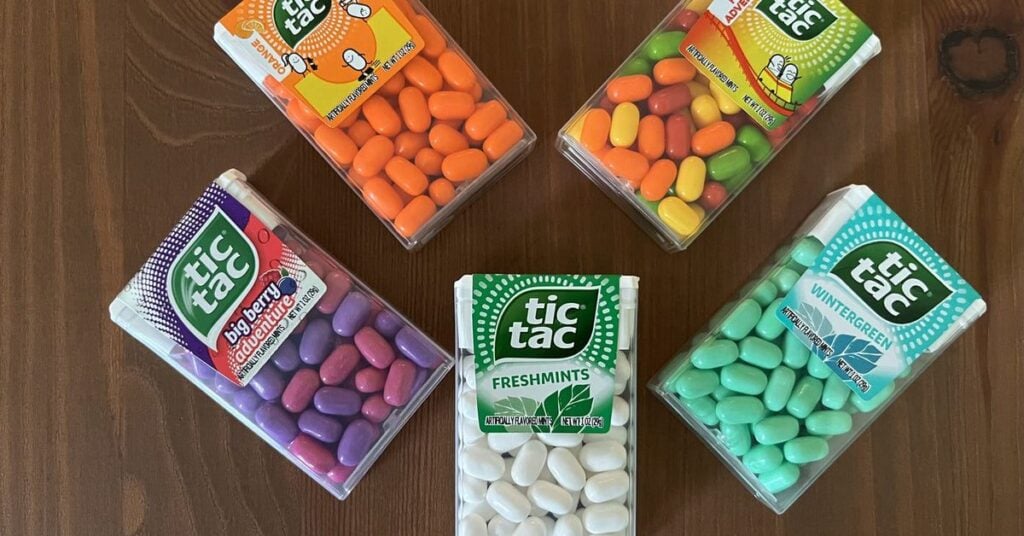
Tracking your anxious predictions is an easy way to correct your mind’s tendency to overestimate the likelihood of bad things happening. Here are a couple of fun ways to do it. Fill your right pocket with 10 pennies or Tic Tac candies. During the day, each time you predict something bad might happen move one of the pennies or Tic Tac candies to the left pocket but only if the prediction comes true. Or, take two boxes of Tic Tac candies in different colors (for example, white and blue). Each time you make an anxious prediction, eat a white Tic Tac from the box. If the anxious prediction comes true then eat a blue Tic Tac. At the end of the day or week, check the number of Tic Tac candies in each box. Stress Less: A Teen’s Guide to a Calm Chill Life
Stress Less Hack: Eating the Frog, but Later
Sometimes, teens are told to start their homework with the most challenging and stressful task to get it out of the way. This is known as “eating the frog.” But starting your study period with the most difficult or stressful task can make you dread starting your homework in the first place. In addition, depending on how stressed the task makes you feel, you might discover that it’s not easy to stay on task and finish it. You’ll have to eat the frog at some point, but try to begin your homework with a task that builds your confidence and engages those mental gears. Or, begin with a fun or pleasant task that lifts your mood a little. For example, if you like poetry and plan to include some in your essay, read them aloud to yourself or find your mom or dad and read the poems to them if they like poetry the way you do. Plus, knowing you will accomplish something fun will make starting your homework a little more fun. Eating that frog is a little easier once you’re feeling a bit happy and confident. Stress Less: A Teen’s Guide to a Calm Chill Life
Stress Less Hack: The 5-Minute Dash

When you’re stressed and putting off starting a task, it helps to think in minutes rather than hours – or at least 5 minutes. A 5-minute dash to the finish can help you start and often starting is the hardest part. Here’s how it works. Next time you’re putting off working on that essay or reading that chapter, set the timer on your phone for 5 minutes. Anyone can work for 5 minutes, right? Now, try to complete as much work as you can in 5 minutes. After 5 minutes, set the timer for another 5 minutes. Now you’ve started. That’s the 5-minute dash! Stress Less: A Teen’s Guide to a Calm Chill Life
Stress Less Hack: Make a Dollar a Day

The make-a-dollar-a-day trick is a fun way to prioritize tasks. Here’s how it works. At the start of your day, sit down and list 5-10 tasks you want to complete. Prioritize the tasks. For tasks that are the most important, assign a value of 25 cents. For moderately important tasks, assign a value of 10 cents. For tasks that are the least important, assign a value of 5 cents. Now, try to earn $1 for the day. You can earn $1 quickest by completing four 25-cent tasks, but you have a lot of flexibility in which ones you tackle first. The goal is to earn $1 and you can do that with any combination: 25 cents, 10 cents, 5 cents. Drop the quarter, dime, or nickel in a jar as you complete a task. You’ll love the sound of a completed task as the coin hits the bottom of the jar. You might even have enough cash to buy yourself an ice cream at the end of the week. Stress Less: A Teen’s Guide to a Calm Chill Life
Stress Less Hack: Manage Time to Get Work Done

Do you tend to underestimate how long you’ll take to complete a task? Try doubling the time! If you guess you’ll take 30 minutes to memorize the new vocabulary words for Spanish class, double the prediction to 60 minutes. If you think you’ll take 60 minutes to write the History essay, set aside 120 minutes. Now, two hours is a lot of time to devote to one task, so break it down into four 30-minute study sessions and set an alert on your phone. Stress Less: A Teen’s Guide to a Calm Chill Life