
One Million Steps for OCD Walk
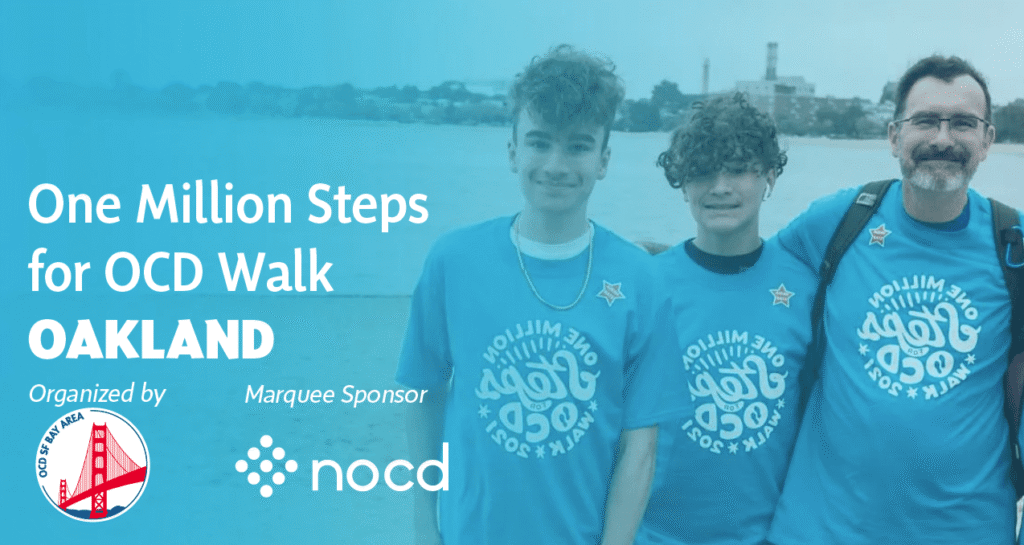
Taking steps towards increased awareness for OCD and related disorders. Please join us at the annual OCD walk, sponsored by OCD SF Bay Area, where Joan Davidson serves on the Board of Directors. The One Million Steps for OCD Walk provides a supportive community, increases awareness, and raises funds for the IOCDF and its Local Affiliates, enabling them to continue their mission OCD Walks are free to attend! Walkers who donate or fundraise $25 or more will receive a Walk t-shirt. Register to walk with us on June 11th! Or make a donation to an individual fundraiser, walk team, or the overall event. I hope to see you there! – Joan Davidson, Ph.D.
The Role of Cognitive & Emotional Schemas in Transdiagnostic Formulations for Anxiety & OCD
Join more than 1,000 clinicians and researchers from across the US and around the world for vibrant programming, impactful connections with peers, and access to exhibitors and sponsors all while enjoying the beauty and excitement of Denver. Joan Davidson will present a workshop with Rochelle Frank, Ph.D., “The Role of Cognitive and Emotional Schemas in Transdiagnostic Formulations for Anxiety and OCD: Possible Make-or-Break Factors When Implementing Treatment” at the Anxiety and Depression Association of America (ADAA) Annual Conference, March 17-20, 2022, in Denver, CO. When targeting specific transdiagnostic mechanisms in anxiety and OCD treatments (e.g., intolerance of uncertainty, perfectionism, anxiety sensitivity, and others), more pervasive psychological processes affecting readiness to engage in acceptance- and exposure-based interventions can be overlooked. This workshop addresses the role of cognitive and emotional schemas, along with negative life events (e.g., trauma, social injustices, histories of increased vulnerability) when formulating hypotheses about resistance to treatment engagement. ADAA’s annual conference offers an ALL-INCLUSIVE fee, including CE/CME credit for all professional level registrations, for the entire 4-day event. There are no add-on or a la carte fees. Full access includes: Admission to all sessions, posters, and conference activities New for 2022! All professional-level registrations include CE/CME credit. More information on the maximum number of credits will be available soon Breakfast on Friday, Saturday, and Sunday; daily morning and afternoon refreshment breaks Keynote Address and other special sessions (Ross Lecture, Scientific Research Symposium, Clinical Practice Symposium) Welcome Reception on Thursday, March 17 Poster Hall and Awards Ceremony on Saturday, March 19
Mistakes, Failures, and Interminable Cases: Lessons Learned in the Real World
Organized by the International OCD Foundation (IOCDF), Joan Davidson, C. Alec Pollard, and Sally Winston will present a workshop, “Mistakes, Failures, and Interminable Cases: Lessons Learned in the Real World” at the International OCD Foundation (IOCDF) virtual conference The Online OCD Conference is the largest national conference dedicated to obsessive-compulsive disorder. This three-day event, hosted by the International OCD Foundation (IOCDF), features programming for the entire OCD community: individuals with lived experience, family members and supporters, researchers, and mental health professionals. This year’s conference will take place virtually and includes more than 200 presenters, 70 talks, and 36 discussion groups. Sessions will be available on-demand for four weeks after the conclusion of the conference.
Exposure Therapy for Anxiety Spectrum Disorders including OCD

This 6-day event is a 12-hour online training that introduces clinicians to the essential theory, structure, and techniques of exposure therapy for anxiety spectrum disorders. The training includes guidelines to implement psychoeducation, cognitive restructuring, construct exposure hierarchies, conduct exposure and response prevention, and implement relapse prevention. The training includes demonstrations and videos to enhance learning. Learn about Exposure Therapy for Anxiety Spectrum Disorders including OCD Beck Institute faculty Dr. Michael Tompkins. A letter of attendance shall be given by Beck Institute for Cognitive Behavior Therapy, Philadelphia, USA. Bonus training by Dr. Shishir Palsapure on CBT basics Workshop Description Morphic Minds is pleased to announce that we have engaged Beck Institute for Cognitive Behavior Therapy to provide Cognitive Behavior Therapy (CBT) training to Morphic Minds. Beck Institute is the home of CBT and provides the gold standard in CBT training for thousands of health and mental health professionals across the globe each year. Cognitive-behavioral therapy (CBT) is the psychological treatment of choice for anxiety spectrum disorders, and the core active ingredient of the approach is exposure with response prevention. Workshop Learning Objectives: Attendees will be able to list two anxiety spectrum disorders. Attendees will be able to describe the risk vs. resource model of anxiety. Attendees will be able to describe two factors in the functional assessment of anxiety. Attendees will be able to list two examples of safety-seeking behaviors. Attendees will be able to list two of the three elements of cognitive restructuring. Attendees will be able to list two types of response prevention. Attendees will be able to describe two of the four steps to build an exposure hierarchy. Attendees will be able to list the three types of exposure strategies. Attendees will be able to describe two steps to set-up an exposure task. Attendees will be able to describe two steps to review a completed exposure task. Attendees will be able to describe two of the guidelines to build a relapse prevention plan. Attendees will be able to describe two typical roadblocks to effective exposure therapy. For More Details and Registration: See the Morphic Minds Website to Register
Parenting a Child with OCD
This 8-week intensive program beginning March 15th meets twice a week–with an initial consultation to be scheduled individually–and the option for additional individual sessions to be scheduled throughout Please see the PROGRAM DETAILS below for more information. Parenting a child with OCD is HARD. It can be confusing to know how to respond to your child’s symptoms and stay calm in the face of their anxiety, all while staying committed to your own core parenting values. Many parents find it difficult to know if they are truly helping their child with OCD, and they report that it feels lonely and isolating to parent a child with OCD when typical parenting advice and experiences just don’t apply. In this 8-week intensive program, join a small group of other parents who will meet twice a week to learn the evidence-based SPACE protocol, developed at Yale, to reduce your child’s OCD symptoms and understand how to apply the protocol yourself after the program is over. Learn how to support your child without giving in to their OCD, even in the toughest OCD moments. Build a concrete set of tools for bridging the gap between knowing what to do and actually doing it. Get help addressing obstacles to practicing what you’ve learned, within a community of other parents. This Program May Be Right for You if: You want to help your child with OCD but your child is not motivated to get help, there are no OCD specialists with availability to treat your child, or your child has not benefitted from previous treatment You find it difficult or impossible not to give in to your child’s OCD When you are able to say no, your child expresses aggressive, destructive, or coercive behavior You and your co-parent can’t agree on the best way to respond to your child’s OCD You are parenting in a way that does not reflect who you really are You want to know other parents who are doing the hard work of parenting a child with OCD You want to work with an OCD expert, but you need a cost-effective alternative to extended individual therapy This program is a unique hybrid of individualized and group-based treatment, depending on your family’s needs. Program Details: An initial 90-minute individual parent consultation to discuss your family’s unique situation. (Scheduling is flexible) Two 90-minute group sessions per week to learn the SPACE protocol to increase support, reduce unhelpful accommodations, gain skills to help you implement the protocol, and get support for staying the course. Groups will be held on Mondays and Thursdays from 11:00 am-12:30 pm – from March 15th to May 6th Optional 45-50 minute individual sessions for additional support or coaching. (Scheduling is flexible) For More Information or to Inquire About Enrolling: Schedule an initial 10-15 minute phone call at no charge. Contact Emily Berner, LMFT at eb@sfbacct.com or 510.652.4455 x5 To learn more about the SPACE program, visit SpaceTreatment.net.
Cognitive Behavior Therapy for OCD in Youth
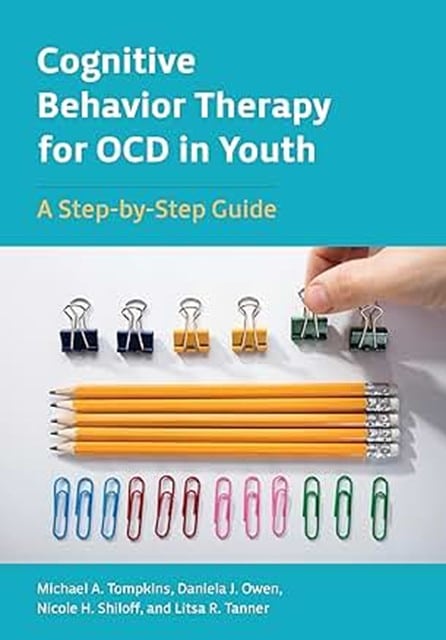
Obsessive-compulsive disorder (OCD), which can cause significant impairment in personal, social, and academic contexts, affects nearly half a million children in the United States. This step-by-step guide provides mental health professionals with an adaptable, evidence-based model that uses cognitive behavior therapy to treat pediatric OCD. The authors present well-tested, empirically-validated strategies that encourage clinical flexibility and creativity. Chapters describe the nuts and bolts of assessment, case conceptualization, and treatment planning, as well as psychoeducation, pharmacotherapy, strategies for relapse prevention, and involving family members in treatment. Richly described case studies illustrate how core strategies can be effectively implemented with youth between the ages of 7 and 18.
OCD A Guide for The Newly Diagnosed
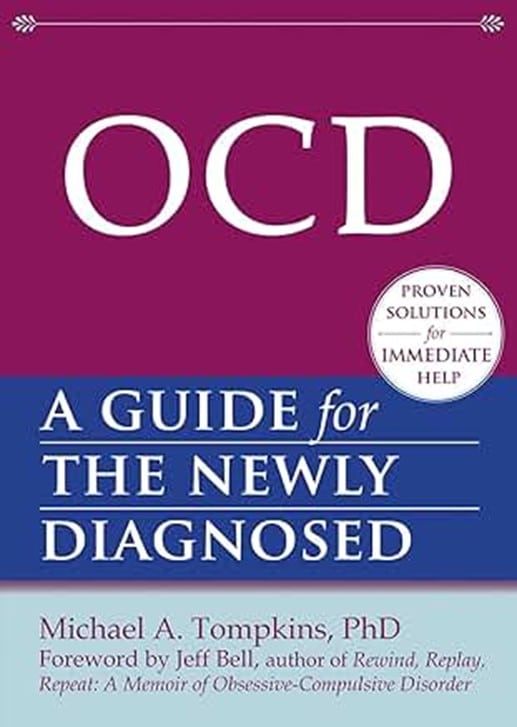
When someone is diagnosed with obsessive-compulsive disorder (OCD), chances are they’ve been living with the symptoms for a long time. People with OCD may have long felt embarrassed by their thoughts and behaviors, which may include fear of contamination, the need for symmetry, pathological doubt, aggressive thoughts, repeating behaviors, and obsessive cleaning. OCD: A Guide for the Newly Diagnosed helps readers understand how OCD works so they can develop better strategies for coping with their symptoms. This pocket guide offers guidance for coping with the diagnosis itself, discusses stigmas related to OCD, and includes help for readers unsure of who they should tell about the diagnosis. Readers also learn about the most effective treatment approaches and easy ways to begin to manage their OCD symptoms.