
Powering Off
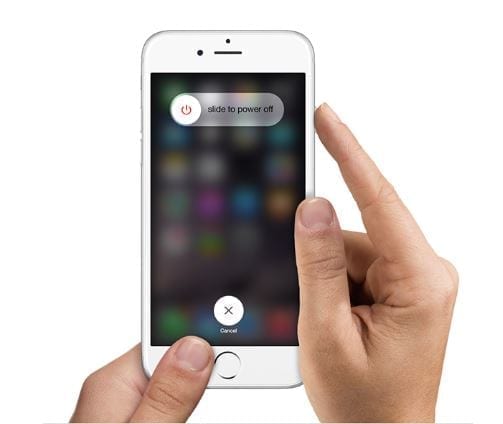
Summer is upon us! For many that means no school, (family) vacations, and more free time. A recent New York Times article ominously titled “Putting Down Your Phone May Help You Live Longer” speaks of just how much of our free time we spend on our phones. The article cites research about the dangerous health effects chronic phone use has on us. Increased cortisol levels that result from using our phones (or even seeing or thinking about our phones) can overtime cause a chronic stress response that leads to very negative effects on our bodies from depression and anxiety to heart attacks and fertility problems. While this is extremely relevant and important to me as a clinical psychologist and an iPhone user (with a long public transit commute), it doesn’t quite solve the problem. Because the solution is not about needing to use our phones less, it’s about HOW. And although this might seem like a no-brainer (duh! Turn it off), because I talk about it daily in therapy sessions, I know it’s not. Smartphone companies spend billions of dollars on keeping us on our phones and have turned our phones into multipurpose devices that we use for so many things these days. So how do we really use our devices less in our everyday lives? 1. Charge your phone outside your room while you sleep. I know this might seem silly, but this is one of the biggest and most effective. The research show many different effects that smartphones have on us – from stress levels to performance to distractibility – just from being in our field of view. Find a spot, whether it is in an adjacent room or across the house that keeps you from checking your phone before you go to sleep, first thing when you wake up, and even during nighttime awakenings. Significant research has shown how damaging smartphones are to our sleep. A big part of that is because they ring, and beep, and light up whenever anything happens, cueing our brains to be alert and pay attention. If you need to be able to receive emergency calls in the night, charge it just outside your room where you will be able to hear if it begins to ring, but you won’t see all of the activity. Also mute your apps so the only sounds will be from calls. 2. Put away your phone when you are at events. You don’t really need photos of everything that you do. Every ball your child catches. Every meal you have consumed. Social media makes you think you do, but you don’t. And when you are so busy looking for that best shot or checking emails and texts when you are at an event, you miss out on actually being at that event. You do not allow yourself to become fully immersed in the experience of the event itself. You do not have to respond every time someone calls you. And let me remind you that every time a child contacts their parent when they encounter a problem, that directly affects their own problem solving ability. So next time you are at the pool during the summer, set the emergency calls that you want to ring through and then put your phone on do not disturb and put it away. Then breathe in the scents. Look all around you at the sights. Feel the warm sun (or cool shade) on your skin. Listen to the sounds of people laughing and splashing. Taste the subtle flavors of the foods you consume. The memories you come away with are the most vivid pictures you can take. Parents need to model this for kids. It’s unrealistic to expect children to put devices away when parents are glued to theirs. Work, photos, emergencies (see above solve) are not excuses to only half engage. 3. Let people know your availability. And have teens do this too. One reason people cite as a challenge with turning off or putting away phones is that someone will try to contact them and then be concerned when they are unavailable. Pick times when you (or kids) should not be on your phone and let others know these. For example, my patients know that I would not answer a call or respond to an email during a session, so I do not wonder who might be calling or emailing while I am in session. As a result, I can completely focus on the person in front of me while my phone is out of sight behind my desk. Setting times when kids can’t be on their phones like homework hours during school (a good way to help kids start HW sooner is to allow devices only after HW is complete) and after a certain time at night or before a certain time in the morning. Our smartphones slow us down considerably during the day, so setting parameters around use for ourselves and children can help with that minimized productivity. It is much easier to take breaks from phones when the other people in our lives know we will be doing so and will not expect a quick response. 4. Problem solve alternatives for things you use your phone for. Many adults and kids use their phones for an alarm to wake up. I always hear “I can’t charge my phone outside my room, it’s my alarm.” Alarm clocks are inexpensive and come in a wide variety these days. Calendar reminders are very helpful, but writing all upcoming events on a brightly colored post-it placed in a convenient location like the fridge or steering wheel of a car are also very helpful. For teens who have school programs on their phones that they check for homework, print out assignments or use a computer that has blocks on social media sites during certain times to allow students to concentrate on working. And while this might seem ludacris in this day and age, using an actual camera to take
Three Videos About Sleep Every Parent Should Watch with Their Teens
Talking to your teen about sleep often leads to arguments and frustration on both sides, but these three videos are great ways to introduce the topic.
Five Tips to Help Teens Build a Sleep Wind-Down Routine

The teenage brain is in high gear all day and when they’re ready to sleep, teens can’t just turn them off. Here are five tips to help them wind-down.
September Reset: Getting Teen’s Sleep Back on a School Schedule
The new school year is here, and it’s time to help your teen reset from sleeping late to getting up early for school. Here are five easy tips to help.
National Epidemic of Underslept Teenagers, & What Parents Can Do about It
Lack of sleep makes our teenagers not only drowsy, grumpy, and inattentive but also risks their well-being, health, and lives. Here are some of the best strategies for parents to help their teens get some sleep.
National Epidemic of Underslept Teenagers, and What Parents Can Do about It

A growing body of research shows that we are raising a generation of teens who are over-stressed and under-slept (see SFBACCT partner Daniela Owen’s blog post on the recent Atlantic article on teen suicide HERE). A 2014 report published by the American Academy of Pediatrics called the issue of tired teens a “national epidemic.” The most recent poll on teens from the National Sleep Foundation found that more than 87% of high school students in the US are getting less than the recommended minimum of 8 hours of sleep. Fewer than 10% of high school students are actually meeting the recommended 8-10 hours of sleep time. Furthermore, more than half of the students reported exhaustion and sleeplessness due to school stress. More recent studies find that the amount of sleep teens are getting is decreasing rapidly as social media and technology are invading teen’s bedrooms. Sleep deprivation predicts a wide range of negative outcomes for teens, including impaired attention and concentration, poor grades, car accidents, anxiety, depression, greater suicide risk, obesity, and diabetes. In other words, lack of sleep makes our teenagers not only drowsy, grumpy, and inattentive but also risks their well-being, health, and lives. A study of 28,000 high school students in Virginia found that each hour of sleep deprivation predicted a 38% increase in depression symptoms, a 23% increase in substance abuse, and a 58% increase in suicide attempts. Problem 1: Circadian Clocks versus School Clock Sleep deprivation is a growing problem for all ages. But the problem has a particularly acute effect on teens whose lives are driven by a school system that requires them to wake up hours before their biological clock is inclined to be wakeful. During the teen years, the natural circadian clock shifts and teens develop a natural “owl tendency”: teens do not feel sleepy until later in the evening, and would naturally sleep later in the morning. Yet, our school systems require them to wake up for an early high school start time. This inevitably compresses the number of hours of sleep teens are actually getting; most high schools begin before 8:30 and their natural circadian clocks make it difficult for them to feel sleepy before 11:00pm. Schools and families are beginning to address these systemic factors in impactful ways. I encourage parents to advocate for their teens: Bring up your concerns about sleep to the schools and support later start times and other sleep friendly policies (i.e., reasonable homework assignments). Problem 2: The Invasion of Electronics and Social Media into Teen’s Lives and Bedrooms Beyond these systemic factors, the rise of electronic devices and social media has changed how much time teens spend with electronics and how much access they have to entertainment content and social media. A recent Norwegian study of 10,000 teens found that the use of electronic devices during the day, and especially one hour prior to bedtime, significantly inhibits teens’ ability to fall asleep. The researchers propose that the increase in electronics use explains the significant changes in teen sleep over the past decade. More than 4 hours of screen use per day predicted getting less than 5 hours of sleep per night. These finding are relevant to the 97% of American teens who have at least one electronic device in their room at bedtime. A new study at JFK Medical Center found that in a large sample of high school students, 80% were not getting enough sleep because of late night phone use, and 25% reported being awakened at night to respond to text messages. This research is helping us understand how electronics are disrupting sleep not just by reducing the number of time available to sleep, but also because the social content is of great interest to teens and thus activates the nervous system. In addition, the intense light emitted by these devices disrupts the body’s wake/sleep cycle. Nevertheless, parents who would never allow a TV in the bedroom of their children now routinely allow their teens to have their laptops, iPads, and iPhones in their bedrooms. The rapid influx of electronics into every aspect of our lives is new territory that individuals and families are just beginning to grapple with. In my experience working with teens in sleep treatment and with their families, curtailing electronics use is the hardest pill to swallow and often the biggest obstacle to change. Teens have a very strong belief that their phones are not an external device but an extension of themselves. This is how they communicate with their friends, keep their music and photos, watch TV, connect to social media, track their schedules, and do their homework. Parents are hard-pressed to enforce technology guidelines and rules when teens feel so strongly about their “inherent right” to have with them at all times the device that indeed serves so many critical functions. When I suggest a technology curfew that involves removing all technology from the bedroom an hour prior to sleep, a teen will claim the need for the laptop because that is how she does her homework. The most common reason that I hear from teens who do not want to see the phone disappear from their bedroom is that they need to use the phone as an alarm clock. I keep a basket full of inexpensive manual alarm clocks in my office, so I am ready when this “reason” invariably comes up. It is very difficult to loosen a teen’s resistance to removing technology from the bedroom, but it is the single most impactful thing that parents can do to improve teen sleep. Every family will find their own standards and guidelines. Parents may often need to honestly consider their own dependence and preoccupation with their own devices. What can you do to help your teen get the sleep she or he needs? I have compiled a list of suggestions based on what we know from the growing body of research on teens and sleep, and what I have learned