
Meet Beck Institute Faculty Member Dr. Michael Tompkins
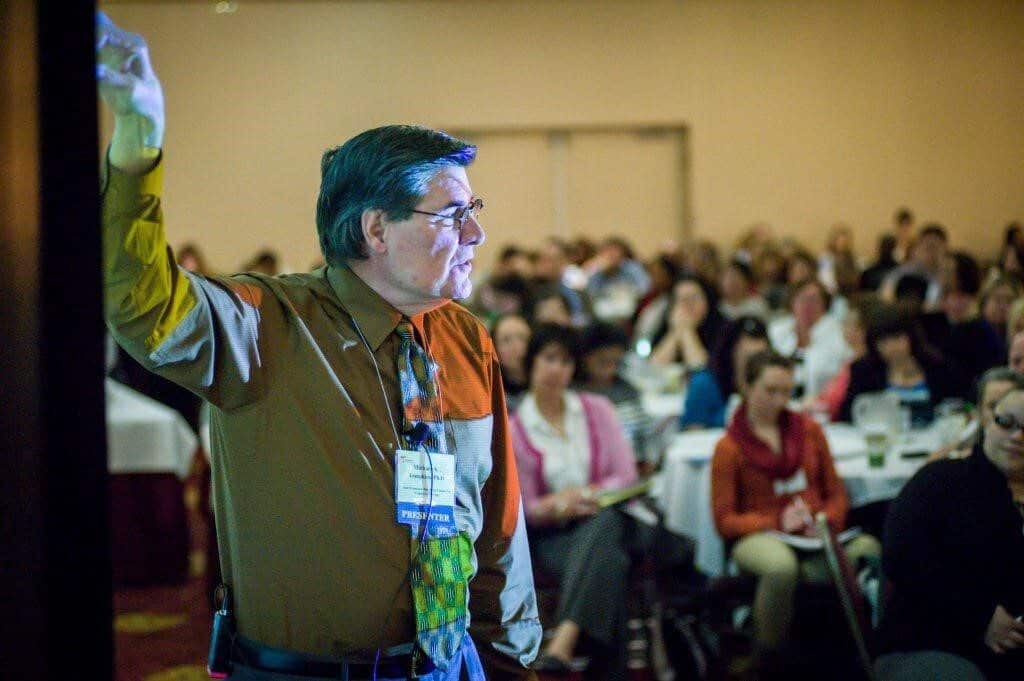
Dr. Michael A. Tompkins is a licensed psychologist and board-certified in Behavioral and Cognitive Psychology. He is co-director of the San Francisco Bay Area Center for Cognitive Therapy. He serves on the Advisory Board of Magination Press—the children’s press of the American Psychological Association—and the editorial board of the Journal of Cognitive and Behavioral Practice. He specializes in the treatment of anxiety disorders and insomnia in adults, adolescents, and children. He provides training and consultation in Cognitive Behavior Therapy (CBT) for insomnia and other sleep problems. We recently spoke with Dr. Tompkins to learn more about him, professionally and personally. Beck Institute: Thank you for taking the time to speak with us today. We would love to hear about any upcoming Beck Institute training projects you are particularly excited about. Dr. Tompkins: I am deeply flattered to serve as a faculty member of the Beck Institute. It is my most cherished professional relationship, and I’m thrilled whenever I’m asked to participate in the Institute’s important mission. I’ve participated in several projects for the Beck Institute—most recently, I was asked to develop adaptations of the CBT Essentials I & II courses when working with youth. This was fun because it reminded me of the importance of conceptualization when working with young people. CBT with youth is a downward developmental extension of CBT with adults. —- READ THE FULL INTERVIEW HERE —-
Can Hoarding Tendencies Be a Craving for the Past for Immigrants and Refugees?
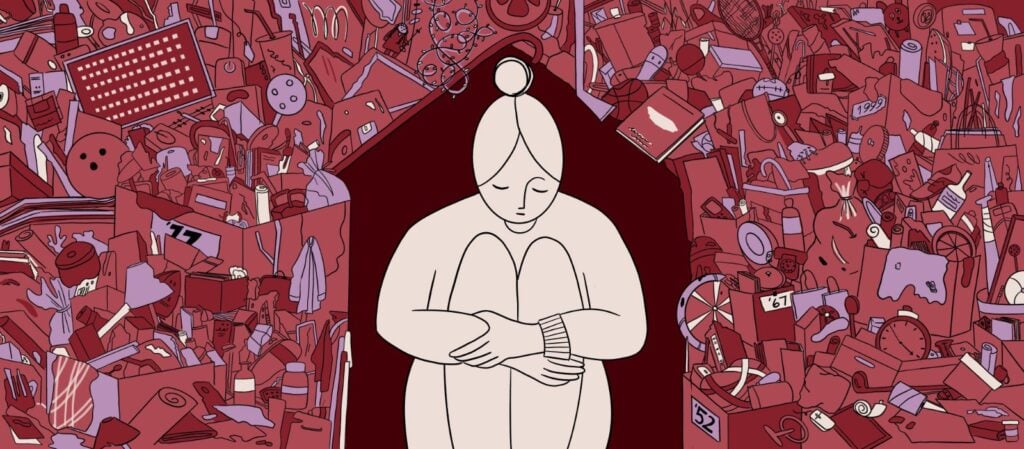
Our attachments to physical possessions are complex, multilayered, and often linked to life experiences — especially within immigrant communities. I recently contributed to an article on the website Hyphen about hoarding tendencies and how it affects immigrants and refugees. From childhood, Nina Laqman knew there was something different about her family home. The living room was lined with multiple glass cabinets filled with trinkets and random collections of ornaments filling every shelf — small ceramic animals, tiny globes, mosque figurines and a vast array of lanterns. Empty plastic containers and carrier bags holding yet more carrier bags were piled together in the kitchen. Empty shampoo and shower gel bottles had taken over the bathroom. “There was just a lot of clutter — things that you didn’t really need to hold on to,” says Laqman, now 28. “When I would go to friends’ houses, I noticed that they had a lot less and the things they did have, they really loved.” Laqman, who spoke to Hyphen under an assumed name, comes from a working-class family of five in north London. Her parents are both from Bangladesh. Over the years, her mother’s accumulation of “stuff” has caused significant stress for Laqman and her two siblings, and has also led to conflict with her father. I think it’s a fascinating point of discussion for several reasons. You can read the full article here I have also written a clinician’s guide on the subject, referenced in the article and available through Amazon.
Addressing Body-Focused Repetitive Behaviors in the Dermatology Practice

Dermatologists are often the first to treat the medical consequences of body-focused repetitive behaviors (BFRBs) such as hair pulling, skin picking, and others. BFRBs are still under-recognized, and the effectiveness of treatments is known only in limited circles. Patients exhibit varied presentations of BFRBs and repeatedly engage in these despite the physical and functional impairments. Dermatologists are uniquely placed to guide patients lacking knowledge about BFRBs and experiencing stigma, shame, and isolation. We provide an overview of the current understanding of the nature and management of BFRBs. Clinical suggestions for diagnosing and educating patients about their BFRBs and resources for patients to seek support are shared. Most importantly, with patients’ readiness for change, dermatologists can guide patients toward specific resources for self-monitoring their ABC (antecedents, behaviors, consequences) cycles of BFRBs and recommend specialized treatment options. Read the Full Paper Here.
SFBACCT Celebrates 25 Years!

The SFBACCT celebrated its 25th anniversary in 2020! Due to a global pandemic, we weren’t able to throw a party to celebrate this milestone, but we still want to express our appreciation to everyone who has worked with us and contributed to our growth for over two and a half decades. It’s been quite a journey! How We Started The SFBACCT was founded in 1995 by Drs. Jacqueline Persons, Michael Tompkins, and me, Joan Davidson. With Dr. Persons at the helm as Director, Michael served as Director of Training and I served as Director of Clinical Services for 18 years. Originally, we were the Center for Cognitive Therapy (CCT) in Oakland, and we first opened our doors as a screening site for a National Depression Screening Day. At the time, our suite on College Avenue in Rockridge was still under construction. Months later, we opened for business. Michael and I were thrilled to work with Jackie to create a hub for cognitive behavior therapy in the Bay Area, which at that time, had so few CBT practitioners. During our initial years, we celebrated often and invited guest speakers, beginning with Dr. David Burns and Dr. Aaron Beck, followed by many more luminaries in the field who guided us as we created a Center that could meet the many clinical and training needs of our community and beyond. A special note of appreciation to Dr. Robert Leahy who initially talked us through the nuts and bolts of operating a clinical center. At a time when there were so few CBT clinical centers on the map, we were incredibly grateful for all the guidance we received from so many experienced and talented clinicians. Our mission has remained the same for 25 years: To provide empirically-supported, ethical, and compassionate care to our patients, to offer high-quality professional training for clinicians, and to disseminate information about CBT to both consumers and professionals. As we established our Center, we enjoyed connecting with the growing number of CBT clinicians in the Bay Area, many of whom became Affiliates of our Center and joined us for our classes, local workshops, Center parties, and opportunities to meet and talk with presenters who visited the Bay Area. It started as a small but very special and close-knit community! Thanks to enthusiastic students, like Kristen Valus, who headed the Cognitive Collective, a group of students interested in CBT, and who later became a staff therapist, and Michelle Hatzis, who helped us launch so many of our endeavors, and later became a clinical group coordinator and co-facilitator, we successfully got many clinical and training projects off the ground. How We Expanded Early on, it became clear that our Center needed to expand. We became the San Francisco Bay Area Center for Cognitive Therapy (SFBACCT) and opened two offices in San Francisco. We were privileged to have had so many talented clinicians work with us over the years. Chad LeJeune was our first staff therapist in SF, soon joined by Simone Madan, Kristen Valus, and Heather Wassarman. In Oakland, we worked closely with our staff therapists, Mark Balabanis, Deborah Efron, Judy Glinder, Alexandra Matthews, Lina Weissman, and Yael Yakar. While it was always bittersweet when staff therapists left to begin their own businesses, we were thankful and appreciative of the contributions they made while part of the Center. Many long-lasting friendships and collaborations were formed and many precious memories were made! How We Changed As the Center grew, so did our business responsibilities, and so in 2004, we consolidated to work more closely together from our East Bay location in Oakland. We switched to a partnership model to be able to focus on clinical projects. As a partnership, in addition to providing clinical care, our goals, both individually and jointly, have been to make contributions to the field by writing, teaching, consulting, supervising, and conducting research. This model has allowed us to support each other in pursuing multiple professional interests. Some of the Partners who worked with our group over the years included Katherine Martinez, Mark Balabanis, Dan Weiner, Janie Hong, and Polina Eidelman. It became clear that the Bay Area CBT community was growing at a rapid pace, which, while incredibly exciting, also clarified the need for an association for local CBT therapists and researchers beyond what our Center could provide. We all owe a tremendous amount of gratitude to Lynn Martin who spearheaded the creation of the Northern California CBT Network (NCCBT Network), which was founded by Lynn and other local CBT clinicians, including some of us from the SFBACCT. We feel lucky to be part of such a wonderful association. In 2013, Jackie Persons left the SFBACCT to create a new center, the Oakland Cognitive Behavior Therapy Center (www.oaklandcbt.com), that includes conducting research as a key mission of the center. Michael and I became Co-Directors of the SFBACCT, and soon after, Daniela Owen, a long-term Partner at the Center, became Assistant Director. The SFBACCT Now For the past several years, our partnership of six, Michael Tompkins, Joan Davidson, Daniela Owen, Jonathan Barkin, Monique Thompson, and Emily Berner, has continued to enthusiastically carry out the mission and partnership goals of the SFBACCT. Due to changes prompted by the Coronavirus pandemic, in 2020 we became a Center without walls, and – like we encourage our patients to do – we’re practicing flexibility and adapting to our changing world! Looking Ahead It’s been an exciting 25-years! We’re so appreciative of all the support we’ve received and the many connections we’ve each made along the way. Our current Partners are delighted to continue working together to further the goals and mission of our Center in the years ahead. Thank you all for being a part of our community. We are grateful for what our Center has accomplished in the past 25 years and look forward to all we can do working together as a Center in the future. Please stay tuned!